Showing posts with label gay. Show all posts

Sunday, 26 May 2013

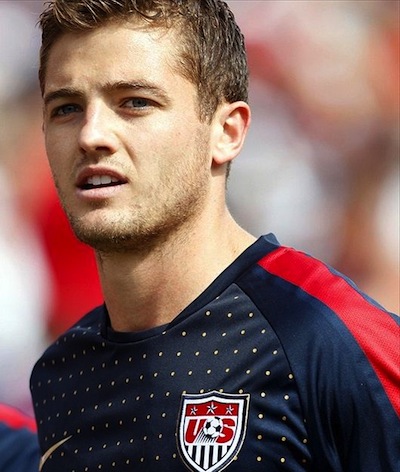
Robbie Rogers' heart-warming story confirms changing attitudes in football

This year, on the 15th of February, at 1am, in a London apartment, one man made a decision to post a honest, heartfelt confession on his personal blog.

This man, a young yet accomplished professional footballer once on the books at Leeds United, had been well aware of what this confession might have done to his career, bearing in mind the track record he was up against. A career which he had painstakingly developed since he was a child and had taken him to the proud heights of representing his country, the United States, at international level.

Despite all this, he was suffering. "Secrets", he wrote, "can cause so much internal damage", and his secret was causing him so much anguish that he made the incredibly brave decision to sacrifice all he has worked for, to forsake his career, in order to release this secret and render him, in his words, a "free man".

On the 15th of February, at 1am, in a London apartment, Robert Hampton Rogers, aka Robbie, came out as gay.

Robbie must have been aware of the only other professional footballer in Britain to come out. Justin Fashanu, once of Notts County, Nottingham Forest and Norwich City, publicly declared he was gay on the 22nd of October 1990. Since then, his career was never the same. He received abuse not only from the fans, but also from established football figures. His own brother disowned him, and as far on as 2012, he sensationally declared Justin was not gay at all. The troubled younger Fashanu sibling was driven to despair and, ultimately, suicide.

Was all this what was to await Robbie once he too came out? It was too big a risk to take, and as such, he announced his retirement from professional football at the same time as his confession. He finished the post with, "I am a free man, I can move on and live my life as my creator intended." Clearly he didn't feel that he still had a role to play in football.

The footballing community, however, had other ideas.

Within hours of the announcement, there was an outpouring of support for Rogers. Many US stars, such as Carlos Bocanegra, Stuart Holden, Oguchi Onyewu, Brad Guzan and Kasey Keller all tweeted messages of pride and respect at his coming out, as well as sadness about his retirement. In the UK, Robert Snodgrass, Clarke Carlisle, Ross McCormack, Alex Bruce and Gary Lineker, among many others, also publicly expressed their support.

Rogers himself was taken aback by the reaction, tweeting: "Thank you everyone for all of the support and love. Wasn't expecting this."

Since the initial reaction, he tried keeping a low profile, but this was difficult - the story marked a turning point in the football zeitgeist.

Since the dark days of yesteryear in which Justin Fashanu played, the attitude towards the LGBT community in sport has changed within the UK and US. Over the last few years, negativity and misinformation has slowly been making the way for tolerance, acceptance and, crucially, indifference - not seeing coming out as a big deal at all, which is the pinnacle of inclusion.

Prior to Rogers' coming out, support towards homosexuality in football came in many forms - the likes of Anders Lindegaard and Joey Barton have publicly talked about the subject and supported the prospect of a fellow footballer coming out. In January 2013, Matt Jarvis of West Ham conducted an interview and posed for pictures in Attitude magazine.


A survey by Staffordshire University showed changing attitudes in the stands too, outlining that more than 90% of football fans would not hold any hostility to a footballer coming out. Meanwhile, major clubs like Liverpool and Manchester City began initiatives in support of the LGBT community.

All of this, though, was mere preparation to the ultimate litmus test - what happens when a player actually comes out? The results, in the form of the public reaction to Rogers' coming out, turned out to be heartwarmingly positive. So much so that, in an amazing turn of events, Rogers began training with LA Galaxy at the start of May, and on the 24th, he officially came out of retirement to become a Galaxy player.

The mere fact that a professional player has knowingly put his career on the line to announce his gay, believing it would be over, only to then receive so much support that, encouraged by the positive environment, he overturned his decision in the matter of months, shows just how far not just football, but society as a whole, has come.

Obviously, this isn't the end of it. The culture of football in the UK still holds entrenched homophobic attitudes. But Robbie Rogers' story is testament to the fact that progress has been made, and continues to do so.

Crucially, part of the reason for Rogers' return to football is to become a role model for those who were still living in fear of revealing their sexuality, not just in sport, but as a whole. Initially telling the Guardian in March he "wouldn't want to deal with the circus", he spoke to USA Today Sports in May after his U-turn: "These kids are standing up for themselves and changing the world, and I'm 25, I have a platform and a voice to be a role model. How much of a coward was I to not step up to the plate?"

Even though he achieved so much merely by publicly coming out, his return to football is truly groundbreaking and a reason for celebration, a "Jackie Robinson moment" as Shawn Francis of The Offside Rules tweeted. Rogers now has the chance not only to continue his amazing journey as a professional sportsman, but to be an inspiration to millions of male football/soccer fans and players living in fear and confusion over their sexuality who now have a role model to look up to.

Sunday, 5 February 2012

Amal Fashanu's documentary may just provide the crucial push needed to kick homophobia out of football

Last week, a documentary aired on BBC3, tackling the issue of homophobia in football. Presented by Amal Fashanu, niece of Justin, the only footballer in the UK ever to come out, "Britain's Gay Footballers" was also a challenging personal journey for her, who, in the programme, came to terms with the tragic events leading up to Justin's death, and tearfully confronted her father, former top-flight footballer John Fashanu, who publicly disowned his brother at the time of his coming out.

I was very impressed with the documentary. Even though obvious signs of discomfort and awkwardness were present in some of the interviewees, not least John McGovern, who declared that "(the word 'poof' is) another word for what we’re talking about, being a homosexual... I don’t even call that discrimination", and John Fashanu, who implied that "family honour" was more important than his brother's wellbeing, there were some positives to be taken from the programme.

First of all, the interview with the players of Millwall FC. The East London club isn't exactly everyone's second team (their own motto is "No-one likes us, we don't care"), but by being the first to invite Amal to their training ground, and having players Darren Purse and Steve Mildenhall publicly discuss the subject of homosexuality in football, they acknowledged and recognised the issue, rather than awkwardly sidestepping it or denying there's even a problem, as is usually the norm in football.

Surprisingly, a Premier League footballer also agreed to be interiewed by Amal. Previously, the lack of support from a top-flight player resulted in the Kick Homophobia Out Of Football campaign being scrapped, but Joey Barton, one of English football's most outspoken and colourful personalities, opened up to her about the subject, and in doing this, came across as a very mature, respectful and tolerant man, alongside being incredibly brave; until that point, not one top-flight player has said a word on the topic, most likely for fear of being ridiculed and called gay just for showing support - and unfortunately, some Twitter messages and photos hashtagged #britainsgayfootballers during and after the programme were pathetic examples of immature homophobic abuse aimed towards Barton and other footballers, the likes of which you'd maybe expect in secondary school.

Speaking of Twitter, the documentary proved a pretty apt litmus test of public perception. Although there were some making immature jibes about the programme and about several footballers who are probably not gay, the vast majority of people had nothing but positive things to say, praising Amal and the interviewees, especially Millwall FC and Joey Barton, so far unique in their recognition and support of homosexuality in football, posting tributes to the late Justin, and slating John Fashanu and John McGovern for their insincere contributions. Many big media personalities also chipped in with praises.

The documentary would lead to several interesting developments. The Sports Charter was launched by the Home Office in March 2011, with the intention of eradicating homophobia and transphobia from sport. Prior to the BBC3 broadcast, it had been slowly but steadily gaining signatures, with tennis star Billie Jean King and rugby veterans Ben Cohen and Gareth Thomas signing the charter in June, and Wycombe Wanderers FC signing it in October. The documentary then aired on Monday 30th January 2012. By Thursday, the entire Premier League had signed up to the Charter.


In a previous article, I stated that one of the first steps in kicking homophobia out of football was for the likes of the FA and the Premier League (the establishment, basically) to publicly condemn homophobia and ensure it becomes as taboo as racism, punishable by long bans, huge fines and prosecution.
Amal's documentary has opened the public's eyes - by having the likes of Gareth Thomas and other rugby players discuss how tolerant rugby is of homosexuality, and Anton Hysen talking about how his sexuality doesn't concern anyone, team-mate, fan or rival, in Sweden, it highlighted the backwardness and idiocy of the attitude in English football (Joey Barton put it best: "archaic"), and that the Premier League's lack of focus on homophobia is the exception, rather than the norm, in the sports world. By signing up to the Charter, the Premier League has recognised the problem and has formally committed to stamp it out. This is that first step.

In her Guardian column, Amal welcomes the Sports Charter as "long overdue" - I myself struggle to believe it only came into being less than a year ago - but also shows her skepticism in asking whether it's "just a public front amid growing concerns about (the football authorities') lack of effort to tackle homophobia and transphobia in sport" and "whether or not it will reassure any players wanting to reveal their true identity and having a safe environment in which to do so".

Maybe not just yet, but with these groundbreaking first steps now taken, maybe the FA will reignite the Kick Homophobia Out Of Football campaign (after all, Millwall's players and Joey Barton have publicly stated their support against homophobia, not to mention the Charter's Premier League signatures), and, by convincing everyone involved in the sport that the environment is indeed becoming safer and more tolerant, players may indeed feel comfortable to come out. And when this happens, we will be very thankful to Amal, who laid the groundwork for it to happen, and who helped ensure her uncle's tragic death was not in vain.

Saturday, 10 December 2011

Why is it so unacceptable for straight people to stand up against homophobia?

I'm going to start by briefly talking about my sexuality. I am a heterosexual male. I find women attractive. My partner is female. My previous relations have been with females. When I settle down and raise a family, it will most probably be with a female. I am comfortable with my sexuality. Now, if I happened to find males attractive, physically or emotionally, then I would embrace it, as would, I'm sure, my friends and family, as they are mature and have sense and reason. But as it is, I do not. I happen to be straight. I was born this way.

What is the point of the above, you may ask? The above is the sort of statement many heterosexual people feel they have to make when they publicly claim to support gay rights, have homosexual friends, or even exhibit "gay" behaviour themselves, such as, say, enjoying music by LGBT-friendly artists, almost in a bid to justify themselves. Statements that I myself have felt that I have to make to some people, because I am strongly in favour of gay rights, and also enjoy music by Lady Gaga and the Scissor Sisters, swing dancing, and other things that may not be classified "macho".

There seems to be this mindset which says that, if you're pro-LGBT, you must be gay yourself. "Oh, why else would you care otherwise?" Now, I myself don't care about being labelled so. It can get annoying if people constantly say you're something you're not, but generally it doesn't bother me. I think I know myself pretty well.

However, there are many out there who feel the same way. People who are straight and believe homosexuals don't deserve the bullying, the name calling, the discriminating, the ostracising, the disowning, and even the violence they suffer on a day to day basis. But they're worried that, by actively taking a stand against LGBT discrimination, people will start questioning their sexuality and maybe they'll start experiencing ostracism and discrimination of their own.

In the public zeitgeist, racism is seen as outdated, hateful and ignorant. The majority of people acknowledge this and condemn it, and when they do, nobody says "why are they speaking out against racism? They're not of that race." We need to get to a point where the exact same applies for homophobia.

When South Africa declared apartheid rule in 1948, it wasn't long before the international community condemned the white minority government, and in the 1960s, imposed such sanctions as trade embargoes and exclusion from international sports tournaments, which were only lifted after the demise of apartheid in 1991. I doubt many asked why millions of white people across the world were condemning a system of law which would have benefited them were they living in South Africa. Sometimes, injustice and unfairness are plain and clear for all to see.

Helen Suzman, a white South African from a wealthy background, actively stood up against apartheid during her 36 years in parliament.

Things are looking up. It's been a very big week for LGBT rights worldwide, with Hillary Clinton explicitly stating that gay rights are human rights, and that reform will be encouraged using foreign aid and diplomacy. The likes of Iran, Zimbabwe and all other countries where homosexuality is illegal will have plenty of food for thought. In Belgium, Elio Di Rupo became the first homosexual head of state in the EU, and the second worldwide, after Icelandic Jóhanna Sigurðardóttir.

Closer to home, England Rugby World Cup winner Ben Cohen launched his foundation, StandUp, in May 2011, which raises awareness against bullying and homophobia. He has been touring the United States, where it has proved incredibly popular. This week he announced on the BBC his plans to launch a UK wing in early 2012.
Ben but is aware of how prevalent bullying and homophobia is worldwide, and how it wrecks lives, and has decided to use his high profile to raise awareness of it.
On the related BBC article, Ben says: "We are looking to affect the next generation. We want to create cultural change and we are doing that by using our StandUp brand to communicate that it is not cool to bully, but it is cool to stand up... we want to engage the masses, those who stand by whilst others are suffering."


Crucially, Ben himself is heterosexual. He has a wife and children.

So, are we going to question why Ben is investing so much time and effort combating homophobia and bullying when he himself isn't gay? Should we stand by while others are suffering and collectively say: "Why should I care? It's nothing to do with me"? Should we look suspiciously at other straight people who speak up for LGBT rights, and simply assume that "they must be gay as well"?
Or, like Ben, are we going to acknowledge that many people who are gay, lesbian, bi, transgender and queer, who just want to get on with their lives, are being tormented, bullied, hurt and even killed because of their sexuality, agree that it's not right, and actively stand up and speak up against it?

Tuesday, 1 November 2011

Will football ever learn to accept homosexuality?


Modern football is, on the whole, a large melting pot. It's played in virtually every country worldwide, by all different kinds of people. If you look at the English Football League, you will find players of all colours, nationalities and creeds. Whites play alongside blacks, Catholics alongside Protestants, Muslims alongside Jews.

However, when it comes to sexuality, then the picture becomes very vague. In all ninety-two clubs of the Football League pyramid, there isn't a single openly gay player.

Statistically, about 6% of the UK population are gay or lesbian. Although it's not as simple as applying this statistic to football and assuming that 6% of all League players are gay, it still means that, in a sport where each team has 41 players on average on their books, not to have one gay player from a pool of nearly four thousand doesn't match up.

The unwillingness for gay players to come out is for a simple reason: football is steeped in homophobia. Many figures in the media, such as PR advisor Max Clifford - who claims to represent several gay footballers - and former Ireland footballer Tony Cascarino, believe a player's career would be ruined if he came out. He'd be singled out for abuse from the crowd, ostracised by his team-mates in the dressing room, bullied by the manager, and made subject of vicious gossip in the media.

There is a tragic precedent in Justin Fashanu, the only player in British football ever to come out. Even before he came out publicly, Brian Clough, who found out he was gay while at Forest, barred him from training with the first team, and condemned him for going to "bloody poof's clubs". Fellow professionals also castigated him, claiming a homosexual has no place in football, he was disowned by his own brother, and later on, accused of sexually assaulting a seventeen-year old in the US, which eventually led to Justin's suicide.

For all the problems British football has with homophobia, two things need to be considered: one is the culture of the sport itself within the country, and the other is the country's stance on homosexuality. Although football itself in the UK suffers from homophobia, our society, when compared to many other countries, is quite tolerant of the LGBT scene. Openly gay politicians exist (Peter Mandelson. Chris Bryant), as do media personalities (Stephen Fry), and even professionals in other sports. Gareth Thomas, one of Wales' greatest rugby players, came out in 2009, and the reaction to this was incredibly positive. Circulations such as Gay Times and Attitude are sold without problems, and the gay scene is thriving, with bars, clubs and Pride events operating and running smoothly.

Anton Hysen, only the second active high-level footballer ever to come out.

It may take several years, but I believe it's a matter of when, rather than if, a popular football figure in Britain, perhaps in the twilight of their career or retired from playing, decides to come out, which could very well set the ball rolling for the FA to relaunch the Kick Homophobia Out Of Football campaign (aborted because no player was willing to appear in it), to gradually change the zeitgeist of football fans, and to eventually convince many players, young and old, that being openly gay will not hinder their careers as footballers.

Now, the problem is convincing everyone on the international scene.

I believe the first active player to come out in the UK will be from a small team at the lower end of the Football League, because the media exposure won't be as great there. Initially, it may well garner interest from many countries, but it will die down quickly, just like the Anton Hysen story did, and because the fans of small clubs are usually tight-knit, almost a part of the club itself, it won't be a big deal for them - many may have even known it for a while already. Chances are they won't be playing in a European tournament, so all league and cup matches will be in England and Wales, where the FA and the League can monitor the games and promptly punish any instances of homophobic abuse.

Now, imagine if a first team player at a huge club like Manchester United, capped for his country, came out as gay. It would explode as global news and remain global news that would make front pages everywhere - including countries where homosexuality is reviled or forbidden. In eighty countries worldwide - around two fifths of the world - it's against the law. Seventy-two of those punish consenting adults with inprisonment, while five, including regional footballing powerhouses Saudi Arabia and Iran, have the death penalty. Would the player be issued with an arrest warrant upon touching down at the airport for an away game or international tournament? How viciously would the player be abused, verbally or even physically, by large groups of fans who may view him as sub-human or as an enemy of God? And what punishment would the likes of UEFA and FIFA, whose very own president Sepp Blatter advised gay football fans to "refrain from any sexual activity" at the Qatar 2022 World Cup (where homosexuality is illegal), administer to clubs and associations whose fans are guilty of homophobic abuse?

The customs and laws of certain countries, and subsequent reactions of its leaders and subjects, prove to be a strong enough deterrent against coming out, but even in countries and regions where things are generally more liberal, the football world manages to keep a high level of animosity and hatred towards homosexuals. If a major player or manager made a racist comment, they would be condemned by virtually everybody in the industry, and rightly so, but important, respected individuals, from players to managers to directors, regularly criticise homosexuals, and get away with it.

Quotes include: "A bunch of faggots is what you have in French football. There are so many homosexual players there, they always provoke you, they touch your thighs, your bum, to see if you will give some kind of signal", which was the reason given by former Argentina international Eduardo Berizzo for leaving Olympique Marseille in 2000, while in 2002, Brazil World Cup winning manager Luis Felipe Scolari said: “If I found out that one of my players was gay I would throw him off the team.” Steaua Bucharest owner and Romanian MEP Gigi Becali, stated in 2007 that if he became president of Romania, he would "get rid of all homosexual and lesbian clubs, and create special neighbourhoods for homosexuals and lesbians, so that they can stay there and leave us [alone]", while Croatian Football Federation president Vlatko Markovic declared in 2010: "while I'm... president of the Croatian Football Federation, there will be no homosexuals playing in the national team". Again, criticism didn't come from the footballing authorities, rather from gay rights groups.


The FA's Kick Homophobia Out Of Football video. This campaign was aborted because no player could be found to support it.

And aside from the player's wellbeing and safety being potentially affected, coming out would impact the player's and the club's marketability. While the likes of Macclesfield Town aren't looking to sell shirts abroad, the likes of Man Utd or Chelsea are, and any mass boycott of a club's merchandise or tickets in a lucrative country where homosexuality is illegal, because of one of the club's players coming out, would severely impact their income and their reputation, leaving other clubs open to exploit the market in their place.

Disgraceful as the above sounds, football is an international business where reputation is key - witness how many top clubs speak of being "brands" and just how much merchandise they have out - and bearing in mind how prejudist and close-minded the marketing industry is, and how breaching sponsorships is seen as a bigger issue than racism (from the Observer's Said and Done column from Dec 12 2004: "£6,769 - Real Madrid's fine for racist chanting and Nazi salutes during their Champions League match with Bayer Leverkusen. £34,500 - Arsenal midfielder Robert Pires' fine for wearing the wrong sponsored T-shirt on French television in October."), it wouldn't be surprising if gay players at top clubs were forced to keep their sexuality hidden until, at best, well after leaving the club.


Charlie Brooker exposes just how cynical the marketing and advertising industry is.

How could we expect a young, lone player to come out against such a torrent of hatred, ridicule and vitriol?

Because football is a global sport, it reins in all cultures and viewpoints of the world, which is a joy to witness, but unfortunately, it's the most bigoted aspects which cause the most noise and disturbance. This, combined with indifference from the establishment, and a desire for chairmen, directors and owners for whom their "team" is actually just a "brand", to carry on cynically targeting those markets where institutional homophobia is rife, at the expense of the wellbeing of one of their own players, render world football a very inhospitable arena for the LGBT community.

Gareth Thomas' homosexuality has been widely accepted and respected. Would this happen in football?

The key to combat this is to ensure that every aspect of British football, from the suits in charge of the establishment, to the international clubs who contest for the top trophies and target overseas markets, all the way down to the Sunday leagues and the fans and spectators, stamps out homophobia in the way racism has been, to the point where any displays of abusive behavour are swiftly condemned by all, and openly gay players become another ingredient in our melting pot, regardless of pressure and ridicule from the outside. And if we can then convince the likes of UEFA and FIFA to also condemn homophobia across the whole game and toughen their stance on all forms of abusive behaviour, including suspension from competitions, then we may be able to ensure a safe playing environment and private life for any footballers who just so happen to love members of the same sex.

It is such a shame regarding the current state of affairs because football, in its purest form, the game itself, doesn't have a sexuality. It doesn't hold any prejudice. It doesn't discriminate. The problem is, those involved in it do.